Featured Digital Artists


Charles Csuri


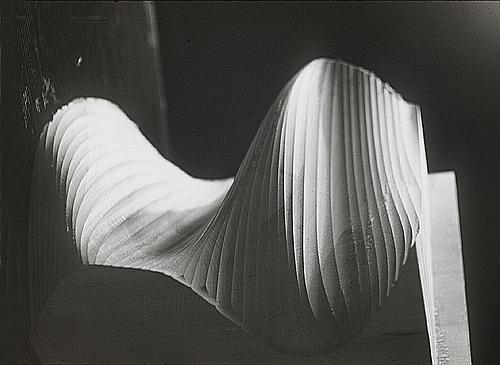
"Sculpture Graphic, 1968"Mathematical techniques were used to define the surface of a block. The pro gram enabled me to alter the curvature on the sides of the block. I was able to experiment with elevations and the frequency of the curvature. Then computer plotter drawings were made for viewing. There was no monitor and graphics display capability.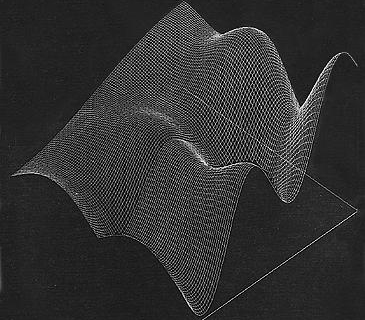 "Ridges Over Time, 1968"This work made use of the Bessel function to generate the surface. The computer program then generated a punched tape to represent the coordinate data. Included were instructions to a 3-axis, continuous path, numerically controlled milling machine. While the device was capable of making a smooth surface, I decided it was best to leave the tools marks for the paths.
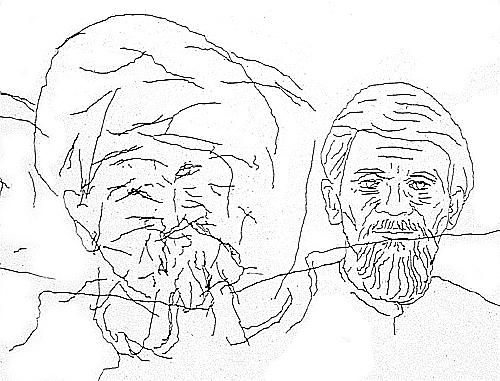
 "Confusion / Distant Memories, 1964"This one of the first digital computer images I created with a transformation on my digitized line drawing. At this point I'm not really sure what was going on. There are several possibilities but it may have simply been a mistake in the program.
 "SineCurve Man, 1967"A digitized line drawing of a man was used as the input figure to a computer program which applied a mathematical function. The X value remained constant and a sine curve function was placed upon the Y value. Given the X and Y coordinates for each point, the figure was plotted by the computer from X´ = X Y´ + C* SIN (X) where C is increased for each successive image.
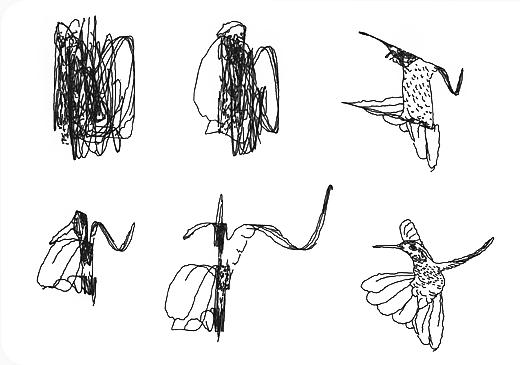
 "The First Hummingbird, 1966"The parameter space for the original line drawing was manipulated such that it first appears as a scribble. Then progressively the parameters are altered such that the drawings in stages reaches its final representation. As animation it had many of the features of what we call "morphing" today.
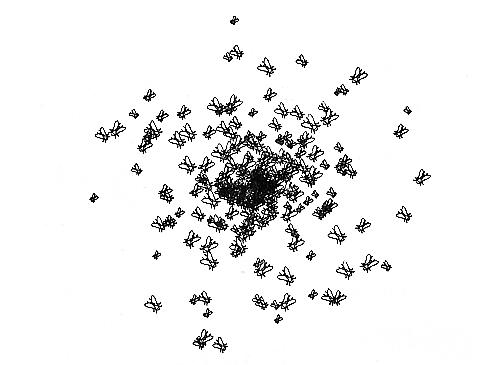
 "Feeding Time, 1966"A computer program generated random numbers which determine the distribution of a specific number of flies in a series of 1 inch concentric rings. Within predetermined limits the random number also decides the orientation and the size of each fly.
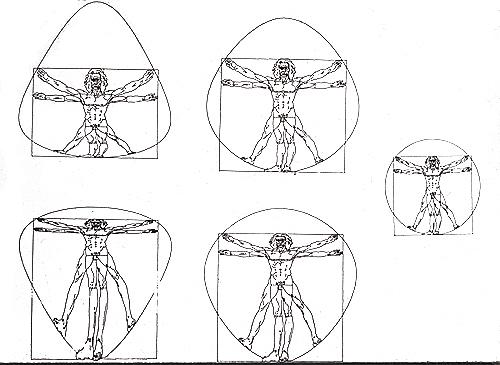
 "Leonardo's Human Proportions, 1966"The mathematical function enabled me to define the region bounding the figure and to specify the desired height.
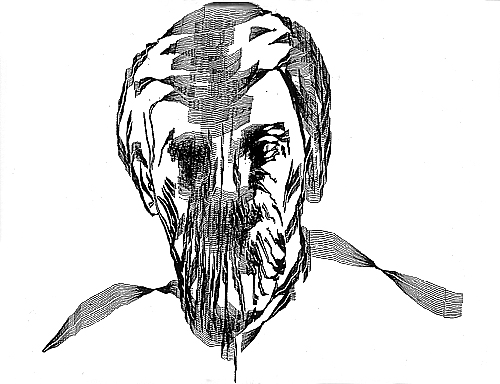
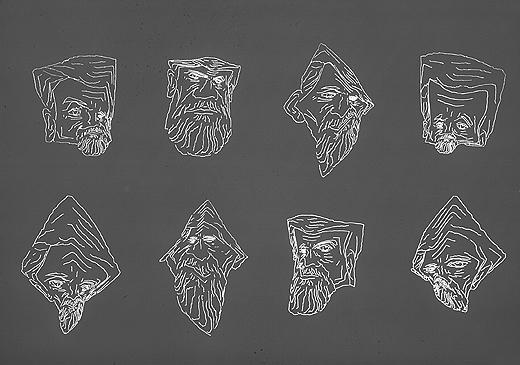
 "Transformations, 1965"The digitized line drawings of the bearded man was used as input. This was an early experiment using circle to square transformation techniques.
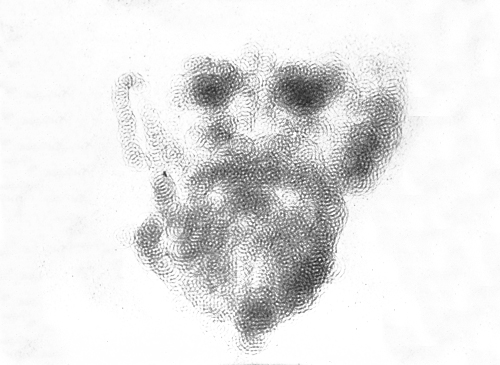
 "Random Light and Shadow, 1969"A line drawing was transformed mathematically into a shaded image. Then a spiral, rectangle, triangle, and star were used as character symbols through each line segment. A random number generator determined the intensity. The size of each symbol is a function of its distance from a reference point outside the picture. This image is an example where the spiral was used as the character symbol.
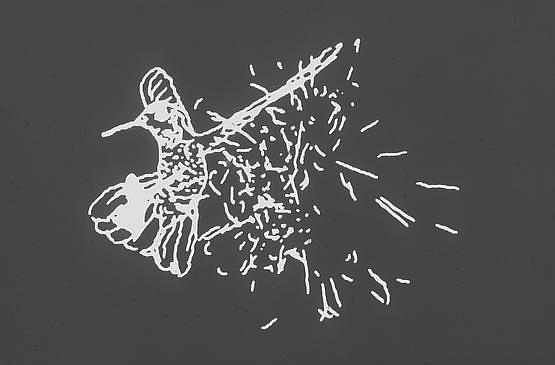
 "Hummingbird, 1967"We completed a ten minute computer animated film entitled Hummingbird. The subject was a line drawing of a hummingbird for which a sequence of movements appropriate to the bird were outlined. Over 30,000 images comprising some 25 motion sequences were generated by the computer.
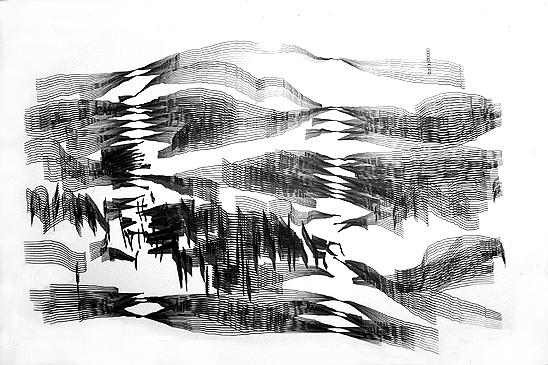
  "SineScape, 1967"I made a line drawing of a landscape which was then digitized as input. A sine wave function was used to make modifications to the drawing. It appears as though I had the program repeat the procedure about twelve times.
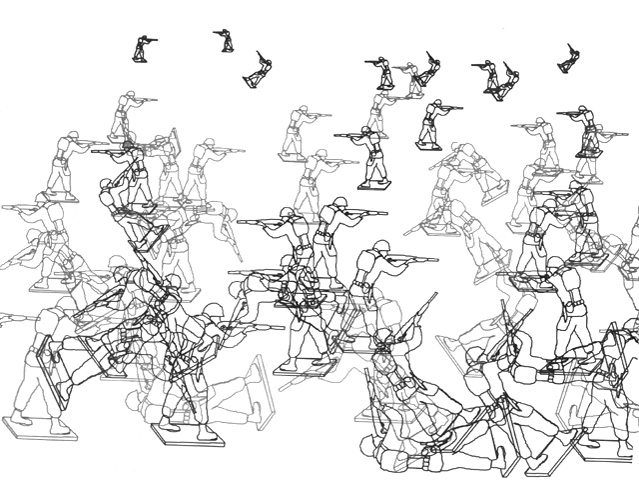
 "Random War"A drawing was made of a single toy soldier and this became a data set. The computer program used a random number generator. The random numbers determined the distribution and position of 400 soldiers on a battlefield. A transformation involving rotations was used to determine the angle of each soldier. Another program assigned military rands and army serial numbers also at random. The random number generator decided the following information: (1) Dead (2) Wounded (3) Missing (4) Survivors (5) One Hero for Each Side (6) Medals for Valor (7) Good Conduct (8) Efficiency Medals.