
 Featured Digital Artists


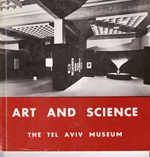
Art and Science exhibition was organized on the occasion of inauguration of the New Tel Aviv Museum April 19, 1971. The Steering Committee members were: Haim Gamzu (Director of the Tel Aviv Museum) and Aharon Katzir (Weizman Institute of Science). The Organizing Commitee members were: Abraham Wachmann (Israel Institute of Technology), Joseph H. Haffe (Rehovoth Instruments Ltd) and David Danon (Weizman Institue of Science).
Cybernetic Serendipity was the first large international exhibition of electronic, cybernetic, and computer art. It took place at the Institute of Contemporary Arts (ICA) in London, UK, from 2 August to 20 October 1968.
Cybernetic Serendipity was the first exhibition to attempt to demonstrate all aspects of computer-aided creative activity: art, music, poetry, dance, sculpture, animation. The principal idea was to examine the role of cybernetics in contemporary arts. The exhibition included robots, poetry, music and painting machines, as well as all sorts of works where chance was an important ingredient.
The exhibition dealt with an exploratory field, it aimed at INSIGHTS andFORESIGHT. One statement claimed, “one can foresee the day when computers will replace railway trains and airliners as the cult symbols of the under twelve’s”. Possibilities rather than achievements were its domain, and in this sense it was prematurely optimistic.
This exhibition was one of the three sections of the Tendencies 5 (fifth international event of the New Tendencies), which took place from June 1st to July 1th, 1973. It was dedicated to visual research by means of computers and it aimed to show that there was no crisis of motivation and method in this field, only critical situations in relation to such research. The “computer visual research” section reinforced what early representatives of the New Tendencies said about “art” and the social position and the tasks of artists-investigators, which had become more pronounced in visual visual research by means of machines. The exhibition of computerists was also an occasion to reexamine the problems which have sprung up after the dissemination of views based on information theory.
